

Your website is your digital storefront, but how many potential customers walk out without leaving a name? Every anonymous visitor is a missed opportunity. Lead capture software is the system that converts this passive traffic into an active sales pipeline. It works around the clock to identify, collect, and organize information from prospects showing clear intent. This isn’t about adding a simple contact form; it’s about installing a strategic engine for growth. The search for the best lead capture software is a critical business decision that directly impacts your ability to generate predictable revenue and stop letting valuable opportunities slip through the cracks. This guide provides a framework for making that decision correctly.
Key Takeaways
- Demand a unified platform: Do not create more work with disconnected tools. Select a single system where lead capture, CRM, and scheduling are already integrated, eliminating manual data entry and centralizing all customer information.
- Focus on return on investment, not price: The cheapest software is often the most expensive due to wasted time and lost revenue. Invest in a platform that provides measurable value through higher quality leads, automated follow-up, and actionable performance data.
- Match the software to your business operations: A generic tool will not solve your specific problems. Service businesses require seamless appointment booking, while other models need different core functions. Choose software with features that directly support how you attract and convert customers.
What Is Lead Capture Software and How Does It Work?
Lead capture software is the system that converts anonymous website visitors into tangible sales opportunities. Its primary function is to identify, collect, and organize information from potential customers who interact with your online presence. Think of it as your most efficient employee, one who never misses a chance to greet a visitor and ask for their contact details, but with far more intelligence and precision.
The process is straightforward and powerful. When a prospect visits your website, the software uses tools like contact forms, appointment schedulers, or quote request pages to gather their information. Once a visitor submits their details, the software instantly captures that data. However, its work doesn’t end with simple collection. Advanced systems automatically verify contact information and enrich the lead’s profile with additional context, creating a comprehensive record for your sales team.
This entire operation is designed to automate and streamline your sales process. Instead of manually tracking inquiries from emails or phone calls, the software centralizes every lead in one place. This ensures that every potential customer is logged, organized, and ready for follow-up. By implementing this technology, you can effectively optimize website lead management and transform your website from a passive digital brochure into an active, high-performance engine for generating new business.
Non-Negotiable Features for Lead Capture Software
Selecting lead capture software requires a clear understanding of what separates a functional tool from a strategic asset. The right platform doesn’t just collect names and numbers; it integrates directly into your operations to accelerate growth. A system that fails to centralize data, automate follow-up, and provide clear performance metrics is not a solution, it’s another administrative burden. Your goal is to find a tool that actively works to convert prospects into paying customers with minimal manual effort.
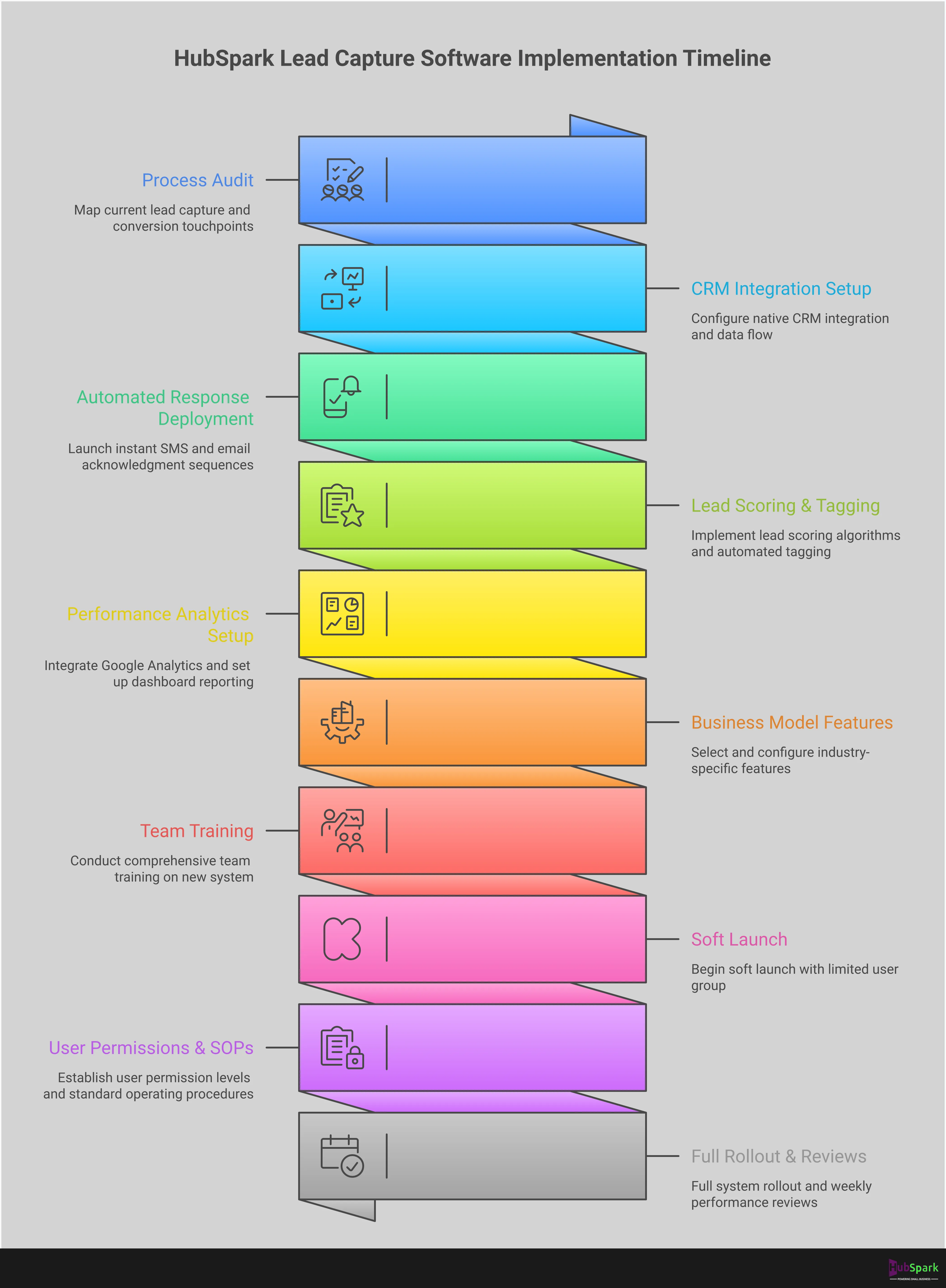
Effective lead capture software is built on four pillars. First, it must seamlessly connect with your customer relationship management system to create a single source of truth for all lead data. Second, it needs powerful automation to ensure every lead receives an immediate and relevant response. Third, it must provide flexible tools for creating high-converting forms and landing pages. Finally, it must deliver clear analytics that show you exactly what’s working and what isn’t, allowing you to make data-driven decisions that improve your bottom line. Anything less is an operational bottleneck.
CRM Integration and Data Management
Your lead capture tool is ineffective if it operates in a silo. The primary function of this software is to gather information on potential customers, but that data is useless if it isn’t immediately accessible and actionable. This is why native CRM integration is not a luxury, it’s a requirement. When a lead submits a form on your website, their information should automatically populate within your central database, eliminating manual data entry and the risk of human error.
This immediate synchronization is the foundation of efficient customer relationship management. It ensures your team has a complete, up-to-date view of every interaction, from the first point of contact to the final sale. A system that forces you to export and import spreadsheets is wasting your most valuable resource: time. Demand a platform where lead capture and data management are two sides of the same coin.
Automated Workflows and Lead Scoring
Speed is the deciding factor in converting a new lead. Modern lead capture tools must therefore include automated workflows that trigger immediate follow-up actions. The moment a potential customer fills out a form, an automated text message or email should be sent to acknowledge their inquiry and set expectations. This instant engagement confirms their request was received and positions your business as responsive and professional.
Beyond initial contact, sophisticated platforms use lead scoring to automatically qualify and prioritize prospects. By assigning points based on a lead’s actions, demographics, or engagement level, the system identifies which prospects are most likely to convert. This allows your team to focus their energy on high-value opportunities instead of chasing cold leads. This combination of automated follow-up and intelligent scoring makes your sales process faster and more effective.
Form Builders and Landing Page Creation
The tools you use to collect lead information directly impact your conversion rates. Complicated, poorly designed forms are a primary cause of lead abandonment. Your software must include an intuitive form builder that allows you to create simple, clean, and mobile-friendly forms that can be embedded anywhere on your website. The goal is to make it as easy as possible for a visitor to give you their information.
For targeted campaigns, the ability to create dedicated landing pages is also critical. These pages are designed with a single objective: to capture a lead. Effective software provides templates and tools to quickly build and launch these pages without needing a developer. By streamlining the user experience, you can significantly improve your ability to optimize website lead management and turn more traffic into tangible business opportunities.
Analytics and Reporting Capabilities
You cannot optimize what you cannot measure. Any lead capture software worth its price must provide a robust analytics dashboard that tracks key performance indicators. Tracking the right metrics is essential to optimize your strategies, allocate resources effectively, and ultimately drive revenue. Your dashboard should give you an immediate, at-a-glance understanding of your entire lead generation funnel.
Look for software that reports on metrics like conversion rates by source, cost per lead, and lead-to-customer conversion time. This data provides the actionable insights needed to refine your marketing campaigns and eliminate wasteful spending. A platform that only collects leads without providing clear performance data leaves you guessing. Demand a system that empowers you to make strategic decisions based on hard numbers, not intuition.
A Breakdown of Top Lead Capture Solutions
Selecting the right lead capture software requires a clear understanding of your operational goals. The market offers a range of tools, from specialized form builders to comprehensive business management platforms. Some solutions excel at a single task, like creating engaging pop-ups, while others provide an integrated system that manages the entire customer lifecycle. Evaluating these options means looking beyond the feature list to see how a tool will function within your existing workflow. A standalone tool might solve one problem but create another by requiring complex integrations and manual data transfers. The most efficient choice is a platform that aligns with your business model and eliminates operational bottlenecks, rather than creating new ones. This decision is critical because the software you choose dictates how efficiently you can convert a potential customer into a paying one. Fragmented systems, where lead data must be manually moved between your website forms, CRM, and scheduling calendar, create friction and increase the risk of lost opportunities. A unified platform, in contrast, streamlines this entire process, ensuring every new lead is captured, tracked, and nurtured automatically. This centralized approach not only saves time but also provides a clear, complete picture of your customer pipeline, allowing you to make smarter decisions and accelerate business growth.
HubSpark: The Complete Business Management Platform
HubSpark is engineered to be the central operating system for your business, where lead capture is just one integrated component. Instead of patching together different apps, you can optimize website lead management directly from the same dashboard you use for appointment scheduling, payment processing, and customer communications. When a lead comes in through your website form or a phone call, their information is automatically organized in the CRM. This allows you to trigger automated follow-ups, send invoices, and request reviews without ever switching platforms. This unified approach eliminates data silos and manual entry, giving you a complete view of every customer relationship from the first contact to the final payment. It’s a system designed to centralize control and accelerate growth.
HubSpot: Comprehensive CRM Solution
HubSpot is a dominant force in the CRM space, offering a powerful suite of tools for marketing and sales teams. Its platform includes features like lead capture forms, live chat, and chatbots designed to convert website visitors into leads. It also provides robust analytics and integrates with a wide array of third-party applications, including Gmail and WordPress, making it a flexible option for businesses focused heavily on digital marketing campaigns. While its CRM capabilities are extensive, businesses often need to pair it with other software to manage operations like payment processing or specialized scheduling. For companies seeking a dedicated marketing and sales engine, HubSpot provides a strong foundation for tracking and nurturing leads through a complex sales funnel.
OptinMonster: Advanced Form Creation
OptinMonster specializes in on-site lead conversion. It is not a CRM or a complete management tool but a powerful engine for creating high-impact lead capture forms. Its primary strength lies in its advanced targeting and trigger options, such as exit-intent technology that presents an offer when a visitor is about to leave your site. You can design everything from pop-ups and floating bars to gamified coupon wheels to grab a user’s attention. While OptinMonster is highly effective at capturing email addresses and contact information, it is a point solution. To be effective, it must be integrated with a separate CRM and email marketing platform to manage and nurture the leads it generates.
Typeform: Interactive Lead Collection
Typeform’s approach to lead capture is centered on user experience. It replaces static, boring forms with interactive and visually appealing surveys that feel more like a conversation. This engaging format can significantly increase completion rates, making it an excellent choice for gathering detailed customer feedback, processing job applications, or handling simple contact requests. The platform’s strength is in its design and usability, which encourages users to share information. However, like other specialized tools, Typeform focuses solely on data collection. You will need to connect it to a more robust backend system to manage the leads, track customer interactions, and handle subsequent business operations.
Cognism: B2B Sales Intelligence
Cognism operates in a different category from the other tools listed. It is not an inbound lead capture tool but a B2B sales intelligence platform designed for outbound prospecting. Instead of capturing leads from your website, Cognism provides a database of verified contact information, including business emails and mobile numbers, for key decision-makers in specific industries. This is a tool built for sales teams conducting targeted outreach and account-based marketing. For local service businesses focused on attracting inbound leads from their community, a platform like Cognism is generally unnecessary. It serves a specific B2B sales model that requires proactive, data-driven prospecting rather than inbound lead management.
Comparing Lead Capture Tools: Price vs. Usability
Selecting a lead capture tool is not just about comparing price tags. It’s about evaluating the total value a platform brings to your business. The cheapest option often introduces hidden costs in the form of wasted time, operational friction, and missed opportunities. A truly effective tool balances cost with intuitive design, ensuring your team can adopt it quickly and use it to generate real results. The right software works for you, not the other way around. It should simplify your process, not add another layer of complexity to manage.
Free vs. Paid Plans: What You Actually Get
Free plans and trial periods serve one primary purpose: to let you test the software. They are not sustainable long-term solutions for a growing business. These introductory offers are designed to give you a glimpse of a platform’s potential, but they almost always restrict access to the most critical features, like advanced automation or full CRM integration. Relying on a free tool means operating with limitations that cap your growth. A paid plan is a direct investment in your lead generation strategy. It provides the stability and advanced functionality required to capture and convert leads consistently, delivering a measurable return on your investment.
Monthly Costs and Feature Limitations
Evaluating monthly costs requires looking beyond the sticker price. Many businesses fall into the trap of subscribing to multiple, low-cost tools to handle different tasks: one for pop-up forms, another for email marketing, and a separate one for contact management. This fragmented approach creates data silos, complicates workflows, and leads to higher costs when you add up all the subscriptions. A superior strategy is to invest in a single, unified platform. An integrated system like HubSpark centralizes your customer relationship management, lead capture, and marketing automation, eliminating the inefficiency and hidden costs of managing disconnected applications. This consolidation provides a clearer view of your operations and a more powerful engine for growth.
User Experience and the Learning Curve
As a business owner, your time is your most valuable asset. A lead capture tool with a steep learning curve is a liability. Complex software often leads to implementation challenges, poor team adoption, and incorrect data entry, ultimately defeating its purpose. You don’t have time to become a software expert; you need a tool that is intuitive from day one. The best lead capture software is designed for usability, allowing you and your team to get started immediately without extensive training. Prioritize a platform with a clean interface and straightforward workflows. This focus on user experience ensures the software becomes an integral part of your daily operations, not another frustrating task on your to-do list.
The Strategic Advantages of Lead Capture Software
Effective lead capture isn’t a passive activity; it’s a core business strategy. Implementing dedicated software is the difference between letting potential customers slip away and actively building a predictable sales pipeline. The right tool moves your business from a reactive state, where you hope for inquiries, to a proactive one, where you systematically attract, identify, and engage high-quality prospects. This isn’t just about adding another app to your toolkit. It’s about installing an operational engine designed to fuel growth.
By centralizing how you collect and manage leads, you gain immediate advantages. You accelerate your response time, ensuring you connect with prospects while their interest is highest. You gain clear, actionable data that sharpens your marketing and sales efforts, eliminating guesswork. Most importantly, you automate the repetitive, manual tasks that consume valuable time, freeing you to focus on closing deals and serving customers. A robust lead capture system is the foundation for scalable growth, providing the structure needed to turn website traffic into tangible revenue.
Improve Lead Quality and Quantity
Stop chasing every possible inquiry and start attracting the right clients. Lead capture software is designed to filter your audience, ensuring the information you collect comes from genuinely interested prospects. By using optimized forms and targeted pop-ups, you can gather crucial contact details from visitors who demonstrate clear intent. This process naturally separates serious buyers from casual browsers. The result is a cleaner, more potent lead list filled with individuals who are already looking for the solutions you provide. This allows your team to invest its energy where it counts, converting high-potential leads instead of wasting time on dead ends.
Automate Nurturing and Accelerate Response Time
In the service industry, speed is a critical advantage. A potential customer who fills out a form on your website is also likely contacting your competitors. Modern lead capture software gives you the edge by enabling an immediate response, with some teams reacting up to 40% faster to new inquiries. You can automate initial follow-ups through SMS or email, confirming receipt of their request and setting expectations. This instant engagement not only impresses potential clients but also keeps them from looking elsewhere. By integrating tools like HubSpark’s text marketing, you can ensure no lead goes cold, turning initial interest into a scheduled appointment before your competition even has a chance to reply.
Gain Actionable Data for Better Targeting
Your website traffic holds a wealth of business intelligence. Lead capture software acts as the window into this data, helping you identify the businesses and individuals exploring your services. By tracking which pages a lead visits or which forms they complete, you gain powerful insights into their needs and priorities. This information feeds directly into your marketing strategy, allowing you to refine your messaging and target specific customer segments more effectively. When this data is managed within a central system, you can see exactly which marketing channels are delivering the most valuable leads, allowing you to double down on what works and cut spending on what doesn’t.
Streamline Operations and Eliminate Manual Work
Manual data entry is a bottleneck that costs you time and introduces errors. Lead capture software eliminates this administrative burden by automating the entire process. When a prospect submits a form, their information is instantly collected, verified, and organized within your system. There’s no need to copy and paste details from an email into a spreadsheet or manually create a new contact in your CRM. This seamless workflow ensures your data is always accurate and up-to-date. With an integrated platform like HubSpark, that lead data flows directly into your appointment management and payment systems, creating a smooth, efficient journey from initial inquiry to final invoice.
Key Metrics for Measuring Lead Capture Success
Implementing lead capture software is only the first step. To truly dominate your market, you must measure its performance. Tracking the right metrics allows you to refine your strategy, allocate resources effectively, and directly connect your marketing efforts to revenue. Without data, you are operating blind, wasting time and money on tactics that don’t deliver results. The goal is not just to generate more leads, but to generate better leads that convert into profitable, long-term customers. Stop chasing vanity metrics and focus on the numbers that actually impact your bottom line.
Effective lead capture software centralizes this data, providing a clear dashboard of your performance. Instead of guessing what works, you can see exactly which channels are driving valuable leads and which ones are falling short. This information is critical for making decisive, data-backed business decisions. By focusing on a few key performance indicators (KPIs), you can stop reacting to problems and start proactively building a predictable pipeline of new business. These metrics reveal the health of your sales funnel, from initial contact to final sale, ensuring every part of your process is optimized for growth. HubSpark integrates these analytics directly into your dashboard, eliminating the need to pull reports from multiple sources.
Conversion Rate and Lead Quality Score
Your conversion rate is the most direct measure of your lead capture form’s effectiveness. It is the percentage of visitors who complete your form and become a lead. A low conversion rate indicates a problem, perhaps with your offer, form design, or website copy. To fix this, you must optimize your website lead management to remove friction and make it easy for potential customers to connect with you.
Beyond the initial conversion, you must also assess lead quality. A lead quality score helps you prioritize your follow-up efforts by ranking leads based on their likelihood to buy. This score can be based on demographic information, on-site behavior, or the specific services they inquire about. Focusing on high-quality leads ensures your team invests its time where it will yield the highest return.
Customer Acquisition Cost and Lifetime Value
Customer Acquisition Cost (CAC) measures the total expense required to win a new customer. This includes all marketing and sales costs divided by the number of new customers acquired in a specific period. An effective lead capture system lowers your CAC by automating tasks and improving targeting, so you spend less to attract the right people. Your objective should be to consistently reduce this number without sacrificing lead quality.
On the other side of the equation is Customer Lifetime Value (CLV), which represents the total revenue you can expect from a single customer over the course of your business relationship. The benefits of a CRM are most apparent here, as it helps you track and nurture customer relationships to maximize their value. A successful business model is built on a high CLV-to-CAC ratio, meaning your customers generate far more revenue than it costs to acquire them.
Engagement Metrics and Response Times
Once a lead is captured, the clock starts ticking. Engagement metrics, such as email open rates and click-through rates on your follow-up messages, show how interested a lead is in your business. Low engagement suggests your messaging isn’t resonating or you are not providing enough value. Using a unified messaging solution allows you to track these interactions across email and SMS from a single dashboard, giving you a complete picture of lead interest.
Response time is one of the most critical factors in converting a lead. The longer you wait to follow up, the more likely a potential customer is to move on to a competitor. Automated workflows are essential for ensuring an immediate response, whether it’s a confirmation email or a text message. Tracking your team’s average response time highlights operational bottlenecks and reinforces the urgency required to win new business in a competitive market.
Overcoming Common Implementation Hurdles
Adopting new software is a strategic move, but it comes with operational challenges. The transition to a new lead capture system can expose weaknesses in your current processes, from fragmented data to team resistance. Anticipating these hurdles is the first step to overcoming them. A successful implementation requires more than just installing software; it demands a clear plan for integrating the tool into your existing workflow, training your team effectively, and maintaining the integrity of your customer data.
The right software should simplify operations, not complicate them. Disconnected systems force manual data entry, which invites errors and consumes valuable time. Furthermore, if your team finds the new tool difficult to use, they will not adopt it, rendering your investment useless. Finally, low-quality lead data leads to wasted marketing efforts and poor customer interactions. Addressing these three areas, integration, adoption, and data quality, is critical for a smooth transition and for realizing the full potential of your new lead capture software. A platform designed to centralize these functions from the start eliminates many of these challenges by design.
Solving Integration Challenges
The most significant barrier to effective lead capture is a disconnected tech stack. When your lead software doesn’t communicate with your CRM, calendar, and payment systems, you create data silos. This forces your team into inefficient, manual data entry, which leads to errors and lost opportunities. A lead captured on your website must flow seamlessly into your sales pipeline without anyone having to copy and paste information between applications.
The solution is to eliminate the integration problem altogether. Instead of trying to connect multiple disparate apps, implement a single platform where all business functions are already connected. An integrated system with strong CRM benefits ensures that every new lead is automatically logged, tracked, and available to your entire team, creating a streamlined workflow from first contact to final payment.
Driving Team Adoption and Training
A powerful tool is worthless if your team doesn’t use it. Resistance to new software is common, especially if the platform is complex or if employees don’t understand how it benefits them directly. Poor user adoption is a primary reason why software implementations fail. To ensure success, the software must be intuitive, and the training must focus on making your team’s job easier, not just adding another task to their list.
To drive adoption, choose a system with a clean, uncluttered user interface. Your training should be direct and action-oriented, demonstrating exactly how the new software eliminates repetitive tasks and helps close more deals. When your team sees the tool as a way to simplify their work through features like unified messaging, they will be more motivated to embrace it.
Ensuring Data Quality and Compliance
The success of your sales and marketing efforts depends entirely on the quality of your lead data. Inaccurate or incomplete information results in failed communication, wasted ad spend, and a damaged reputation. Manually entered data is prone to typos and inconsistencies, which degrades the value of your customer database over time. Establishing a process for maintaining clean data is not optional; it is fundamental to growth.
Implement a system that standardizes data collection from the start. Use forms with required fields and validation rules to ensure you capture consistent, accurate information for every lead. A platform designed to optimize website lead management centralizes this process, creating a single source of truth for all customer data. This not only improves your marketing effectiveness but also ensures you maintain compliance with communication regulations.
Matching Features to Your Business Model
The right lead capture software is not a one-size-fits-all solution. Your business model dictates the features you must prioritize to turn potential interest into profitable action. A plumber has fundamentally different lead capture needs than an online boutique or a law firm. Choosing a tool without aligning its features to your operational reality is a direct path to wasted resources and missed opportunities. The most effective platforms are those built with the flexibility to serve specific industry demands. This requires a clear-eyed assessment of how you attract, engage, and convert customers. Don’t get distracted by a long list of features; instead, focus on the specific tools that will directly impact your bottom line. A generic solution yields generic results. Your business requires a targeted approach that matches its unique structure and goals.
Service-Based Businesses: Appointment Integration and Local SEO
For service-based businesses like HVAC companies, plumbers, and auto repair shops, your primary goal is to get on the schedule. Your lead capture software must have seamless appointment management solutions that allow clients to book services directly from your website or local listings. This eliminates phone tag and captures high-intent leads at their moment of need. Furthermore, since your customers are local, your software must strengthen your visibility in the community. Prioritize tools with built-in features that improve local SEO for small businesses, ensuring you appear when potential customers search for services in your area. This combination of easy scheduling and strong local presence is non-negotiable for dominating your service area.
E-commerce: Shopping Behavior Tracking and Payment Integration
E-commerce businesses operate in a crowded digital marketplace where understanding customer behavior is paramount. Your lead capture software must go beyond simple contact forms. It needs to integrate with your online store to track user activity, such as viewed products, abandoned carts, and purchase history. This data is critical for creating targeted marketing campaigns that convert shoppers into repeat buyers. Equally important is a frictionless checkout process. Your platform must offer secure and simple payments solutions for small businesses to minimize cart abandonment. By connecting shopping behavior insights with seamless payment integration, you create a powerful system for capturing and converting leads directly on your website.
Professional Services: Consultation Scheduling and Reputation Management
Firms in law, finance, and consulting sell expertise, and trust is their most valuable asset. Your lead capture process must reflect this. The software you choose should facilitate easy consultation scheduling, allowing potential clients to book a meeting without friction. This is your first opportunity to demonstrate professionalism and efficiency. Beyond scheduling, your online reputation is your digital handshake. You need a system with integrated reviews and reputation management solutions to actively collect and display positive client testimonials. Without proper tracking of your lead sources and online reviews, it’s impossible to know which marketing efforts are building the trust necessary to attract high-value clients.
Critical Mistakes to Avoid When Selecting Lead Capture Software
Selecting the right lead capture software is a critical business decision, not just an IT purchase. The wrong tool creates operational bottlenecks, wastes marketing spend, and ultimately costs you customers. Many business owners fall into predictable traps that limit their growth potential from the start. To ensure your investment accelerates your business instead of holding it back, you must avoid three common, high-stakes errors: prioritizing price over long-term value, ignoring essential integrations, and failing to plan for future scale.
Focusing on Price Over Value
Choosing software based on the lowest price tag is one of the most expensive mistakes a business can make. A cheap tool that delivers low-quality leads is a drain on resources, forcing your team to waste time on prospects who will never convert. The initial savings are quickly erased by inefficient ad spend and lost revenue opportunities. Instead of focusing on the monthly fee, evaluate the software’s total value. A superior platform will not only capture leads but also improve their quality, automate follow-up, and provide the data you need to optimize website lead management. The right software is an investment that pays for itself through higher conversion rates and streamlined operations.
Ignoring Critical Integration Needs
A lead capture tool that doesn’t connect with your other systems is not a solution; it’s another problem. Disconnected software creates data silos, forcing you and your team into tedious, manual data entry between your form builder, your CRM, and your scheduling calendar. This fragmented workflow is inefficient and a breeding ground for human error, leading to lost leads and poor customer experiences. Your lead capture software must integrate seamlessly with your core operational tools. A truly effective system ensures that a new lead flows automatically into your customer relationship management (CRM) software, triggering follow-up sequences and making client data instantly accessible across your entire platform.
Overlooking Future Scalability
The software that works for you today might become a major liability tomorrow. Many businesses select a tool that meets their immediate needs without considering future growth. As your company expands, you will handle more leads, add new services, and hire more employees. A system that lacks flexibility will inevitably stifle that growth, creating operational chaos and forcing you into a costly and disruptive migration to a new platform. Choose software designed to scale with you. Your lead capture tool should be part of a comprehensive platform that can manage increased lead volume, support multiple locations with dedicated location pages, and adapt to the evolving demands of your business without requiring a complete overhaul.
A Framework for Choosing the Right Lead Capture Software
Selecting the right software is not about finding the tool with the most features. It’s about implementing a system that eliminates operational friction and directly contributes to growth. A haphazard choice leads to wasted money, frustrated teams, and lost leads. To make a decisive and correct investment, you need a clear framework. This structured approach ensures the software you choose solves your specific problems and scales with your business.
Assess Your Current Lead Generation Process
Before evaluating any software, you must first diagnose your current lead generation process. As a business owner, you are likely managing multiple roles, which can make consistent lead generation a significant challenge. Map out every step a potential customer takes, from their first interaction to the point they become a qualified lead. Where do leads come from? Where do they drop off? Identify the manual data entry, follow-up tasks, and communication gaps that consume time and cause leads to go cold. A clear understanding of these bottlenecks is critical to optimize website lead management and select a tool that solves your actual problems, not just perceived ones.
Define Your Integration Requirements
Your business already runs on a set of tools, and any new software must work with them seamlessly. A lead capture tool that doesn’t integrate with your existing systems creates more problems than it solves, leading to data silos and inefficient manual work. List your non-negotiable integrations. Does the software connect to your payment processor, your calendar, and your marketing platforms? The primary goal is to centralize information. A powerful tool should feed every lead directly into your CRM, providing the full benefits of a customer relationship management system without extra steps. Fragmented data is a growth bottleneck; integrated systems accelerate it.
Evaluate Support and Training Resources
The most advanced software is worthless if your team cannot use it effectively. Poor user adoption is a primary reason new technology fails to deliver a return on investment. Look beyond the feature list and investigate the provider’s support and training infrastructure. Do they offer comprehensive onboarding? Are there accessible training materials, like video tutorials and knowledge bases? What is the quality and responsiveness of their customer support? A strong partner provides the resources to ensure your team can master the tool and integrate it into their daily workflows. This support is essential for turning a software purchase into a genuine operational asset for your appointment management solutions and other core functions.
Related Articles
- The Ultimate Guide to Lead Capture Systems
- How Does HubSpark Help Business Owners with Lead Generation? – HubSpark
Frequently Asked Questions
I’m a small business owner. Do I really need dedicated software for this? Yes. Relying on manual methods like spreadsheets or email inboxes to track potential customers is an operational bottleneck. Dedicated software automates the entire process of collecting, organizing, and responding to new inquiries. This ensures no lead is ever missed and allows you to respond instantly, which is a critical advantage when a prospect is also contacting your competitors. It transforms your website from a passive brochure into an active system for generating business.
What is the difference between lead capture software and a CRM? Lead capture software is the tool at the front line; its job is to collect a prospect’s information through forms, schedulers, or landing pages. A Customer Relationship Management (CRM) system is the central database where you store and manage all information and interactions related to that prospect and customer. While some tools only capture leads, a truly effective system integrates both functions. This means a new lead is automatically created and organized within your CRM, eliminating manual data entry and providing a complete history of every customer relationship.
Why should I choose an all-in-one platform instead of a specialized form builder? A specialized form builder solves one problem: it collects contact information. However, that data is useless until you move it into another system for follow-up, scheduling, and invoicing. This creates a fragmented workflow that costs time and invites errors. An all-in-one platform like HubSpark eliminates this problem by design. Lead capture is fully integrated with your CRM, appointment calendar, and payment processing, creating a single, streamlined system to manage the entire customer journey.
My team isn’t very tech-savvy. How difficult is it to get started with this kind of software? The best software is designed for usability, not for IT experts. A platform with a steep learning curve is a liability that leads to poor team adoption and wasted investment. You should prioritize a system with a clean, intuitive interface that makes sense from day one. An effective platform should simplify your team’s daily tasks, not add complexity. With straightforward workflows, your team can get started immediately without needing extensive training.
How quickly can I expect to see results after implementing lead capture software? You can see an immediate impact on your operational efficiency. The moment the software is active, it begins automating data entry and follow-up, which saves time and prevents leads from falling through the cracks. In terms of generating more business, the results depend on your website traffic and marketing efforts. However, by improving your conversion rates and accelerating your response time, the software puts a system in place that consistently turns more of your existing traffic into tangible sales opportunities.

I am a serial entrepreneur with a 20+ year background in marketing & advertising, with a specific focus on SEO/online/digital marketing. I have a passion for helping owners of small & medium sized businesses grow rapidly through organic search engine optimization & digital marketing. I am blessed to lead a team of some of the most hard working, brilliant, and passionate team to help all of our clients reach their revenue goals!
 App Today!