

Your best salesperson is persistent, knowledgeable, and always follows up at the perfect moment. Now, what if you could automate that process so it works 24/7 without fail? That is the function of a lead nurturing strategy. It is a systematic, automated process that builds trust and guides potential customers from their first inquiry to a final sale. Instead of pushing for an immediate commitment, it establishes your business as the credible expert they turn to when they are finally ready to act. This article breaks down the core components of this system, providing specific lead nurturing examples you can implement to convert more prospects with professional efficiency.
Key Takeaways
- Automate Your Follow-Up Process: Eliminate missed opportunities by implementing strategic workflows for every stage of the customer journey. Consistent, automated communication builds trust and moves leads forward without manual effort.
- Segment Leads for Maximum Relevance: Stop generic messaging. Group your contacts by their specific behaviors and demographics to deliver personalized content that directly addresses their needs, dramatically increasing engagement and conversion rates.
- Execute a Multi-Channel Nurturing Strategy: Confining your communication to email is a critical error. Integrate SMS, social media retargeting, and strategic phone calls to create a unified experience that keeps your business visible and accelerates the sales cycle.
What Is Lead Nurturing and Why Does It Matter?
Lead nurturing is the strategic process of building relationships with potential customers who are not yet ready to buy. Instead of pushing for an immediate sale, you provide consistent, valuable information that guides them through their decision-making process. Think of it as a structured conversation that establishes your business as a credible expert and the go-to solution for their problems. When a lead first shows interest—whether by downloading a guide, requesting a quote, or signing up for your newsletter—they are rarely prepared to commit on the spot. A lead nurturing system ensures that initial interest doesn’t fade away.
For a small business, this process is critical. Every lead represents a potential revenue stream, and letting them go cold is like throwing away marketing dollars. The goal is to keep your business top-of-mind by delivering the right message at the right time. This requires a centralized system where you can track interactions, segment contacts, and automate follow-ups. Without a unified platform, you are left managing scattered data across spreadsheets and disconnected apps, making consistent communication impossible. An effective nurturing strategy transforms passive interest into active engagement, systematically converting prospects into profitable, long-term customers.
The True Cost of Unnurtured Leads
Ignoring leads that aren’t immediately ready to purchase comes with a significant cost. Research shows that nearly 80% of new leads never convert into a sale, largely due to a lack of follow-up. For a service business, that translates directly into lost jobs and wasted ad spend. Each time a potential customer’s inquiry goes unanswered or their interest isn’t cultivated, your sales funnel springs another leak.
The financial impact is twofold: you lose the initial sale and the potential for larger future transactions. Properly nurtured leads don’t just convert more often; they also make purchases that are 47% larger than their non-nurtured counterparts. Failing to implement a nurturing process means you are actively leaving substantial revenue on the table and surrendering market share to competitors who do.
How Lead Nurturing Drives Revenue
A well-executed lead nurturing strategy is a direct engine for revenue growth. By maintaining consistent contact, you keep your brand visible and build the trust necessary to close a deal when the timing is right. This process significantly increases conversion rates by ensuring that your business is the first one a prospect thinks of when they are finally ready to act. It’s about playing the long game to secure high-value customers.
This is where a powerful CRM for business becomes indispensable. It allows you to automate personalized follow-ups, track every customer interaction, and identify the most qualified leads. By combining email sequences with timely text marketing, you can create a multi-channel nurturing experience that keeps leads engaged and moves them efficiently toward a purchase, turning your contact list into a predictable source of income.
The Core Components of a High-Conversion Nurturing Strategy
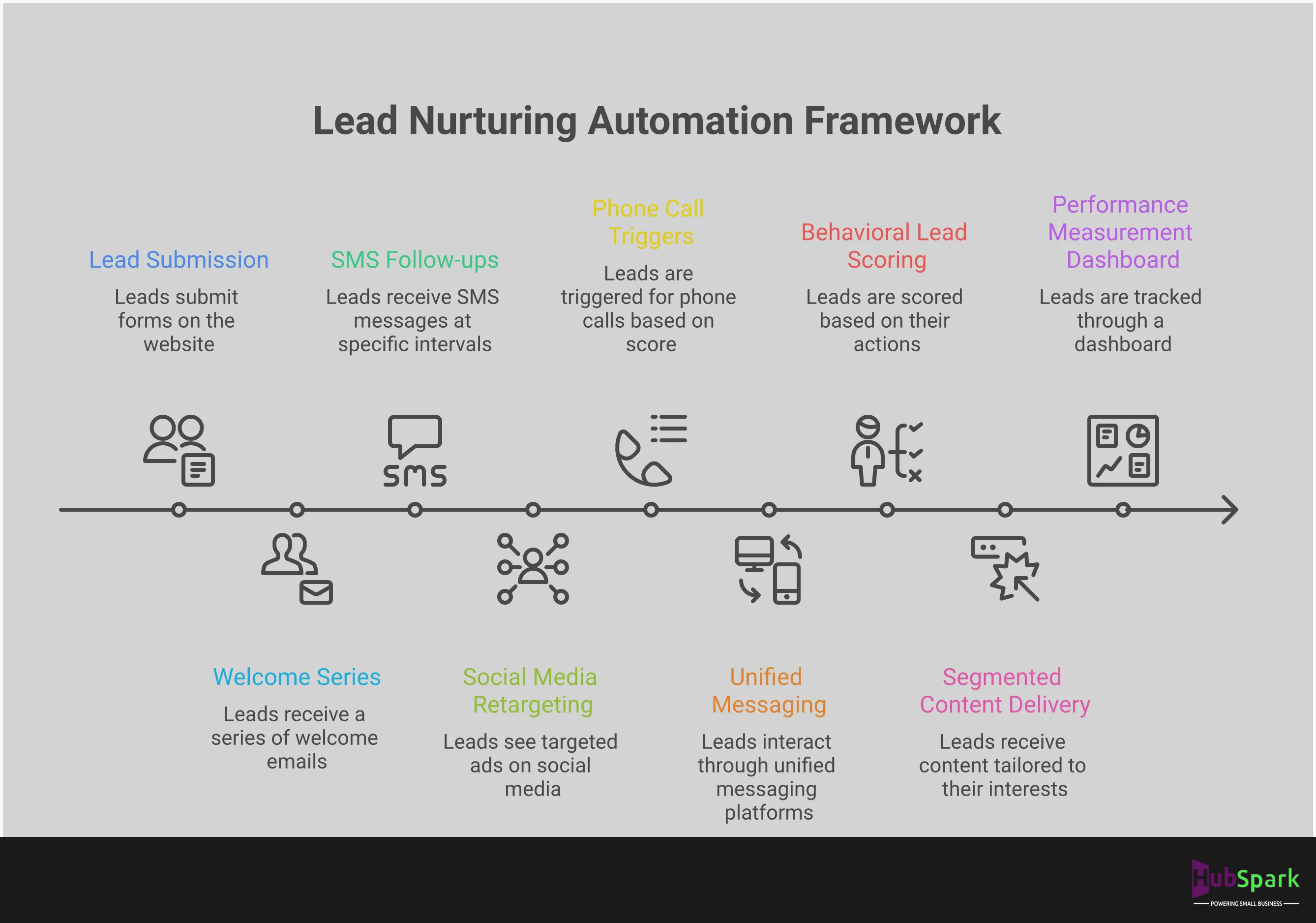
A high-conversion lead nurturing strategy is not a series of random acts. It is a deliberate, systematic process designed to build trust and demonstrate value from the first point of contact to the final sale. Effective nurturing requires a framework built on four essential pillars: valuable content, strategic personalization, multi-channel engagement, and optimized timing. Without this structure, your efforts will be disjointed, and valuable leads will fall through the cracks.
The goal is to guide potential customers through their decision-making process, answering their questions and addressing their pain points before they even have to ask. This transforms your business from a mere service provider into an indispensable partner. By mastering these core components, you create a predictable pipeline of qualified, sales-ready leads who see your business as the only logical solution. This isn’t about simply staying in touch; it’s about architecting a journey that consistently converts interest into revenue. The following sections break down each component into actionable steps, providing the blueprint to construct a nurturing machine that drives sustainable growth.
Create Content That Guides and Converts
Your content is the foundation of your nurturing strategy. Every email, text message, or guide you send must serve a purpose: to educate the lead and move them closer to a decision. Stop sending generic sales pitches and start providing real solutions. Create content that addresses common questions, overcomes objections, and showcases your expertise. For an HVAC company, this could be a guide on choosing the right AC unit; for a law firm, an article explaining a complex legal process. This approach positions you as a trusted authority. By consistently delivering value, you build a relationship where your business is the clear expert, making the final sale a natural conclusion. This is how you optimize website lead management and turn passive interest into active engagement.
Implement Strategic Personalization
Generic, one-size-fits-all communication is ineffective. True personalization goes beyond using a lead’s first name; it involves leveraging data to tailor every interaction to their specific needs and history. A robust Customer Relationship Management (CRM) system is critical for this. It allows you to track every touchpoint—from the initial inquiry about a specific service to their on-site behavior. Use this information to send highly relevant follow-ups. If a lead inquired about roofing repair, send them a case study on a similar project, not a promotion for gutter cleaning. This level of detail demonstrates that you listen and understand their unique problems, building the trust required to close the deal.
Engage Across Multiple Channels
Your leads are not confined to a single platform, so your nurturing strategy shouldn’t be either. While email is a powerful tool, a truly effective strategy integrates multiple touchpoints to keep your business top-of-mind. Supplement your email campaigns with targeted SMS messages for timely reminders or exclusive offers. Use social media retargeting to reinforce your message. A well-timed phone call can often be the final push a lead needs to commit. The key is to create a seamless experience across all platforms. With unified messaging solutions, you can manage these diverse conversations from a single dashboard, ensuring no lead is ever ignored and every interaction is part of a cohesive strategy.
Optimize Your Timing and Frequency
When and how often you contact a lead is just as important as what you say. Bombarding a new prospect with daily messages will drive them away, while waiting too long to follow up allows a competitor to step in. The optimal cadence is data-driven, not based on guesswork. Use your system to track engagement metrics like email opens and link clicks to determine interest levels. Automate your follow-ups to ensure they are sent at the most impactful moments, such as immediately after a form submission or to schedule a consultation. This disciplined approach uses appointment management solutions to ensure persistent, professional follow-up without manual oversight, maximizing your chances of conversion at every stage.
How to Segment Leads for Maximum Impact
Effective lead nurturing is not about sending more messages; it’s about sending the right message to the right person at the right time. Generic, one-size-fits-all communication wastes your resources and alienates potential customers. Lead segmentation is the process of dividing your leads into groups based on shared characteristics or behaviors. This is not an optional step—it is the foundation of a high-conversion strategy that respects your prospects’ time and attention.
By organizing your contacts, you can tailor your follow-up to address their specific pain points and interests, dramatically increasing engagement and conversion rates. A lead who downloaded a guide on roof repair has different needs than one who requested a quote for a full replacement. Treating them the same is a critical error. A centralized platform is essential for this process, allowing you to track lead data and automate communication from a single dashboard. The right CRM software makes it possible to manage these segments without creating more administrative work for your team.
Segment by Demographics
The most straightforward way to begin segmenting is by using demographic data—the basic, factual information you collect about your leads. This allows you to tailor your messaging to specific groups based on characteristics such as location, company size, or job title. For a home services business, this could mean creating separate campaigns for residential versus commercial clients or targeting specific neighborhoods with unique offers. This targeted approach ensures your content resonates with the distinct needs of each segment. Don’t underestimate the power of this data; it’s the first layer of personalization that shows a lead you understand who they are and what they might need from your business.
Segment by On-Site Behavior
Understanding on-site behavior is critical for effective lead nurturing. By tracking how leads interact with your website—such as pages visited, content downloaded, and forms submitted—you can create segments that reflect their current interests and level of engagement. A prospect who repeatedly visits your emergency services page requires a more urgent and direct follow-up than someone browsing blog posts. This behavioral data allows for highly personalized and relevant communication that speaks directly to what’s on their mind. This is how you optimize website lead management; you stop guessing what leads want and start responding to the clear signals they are already giving you.
Implement Lead Scoring to Prioritize Follow-Up
Lead scoring is a method used to rank prospects on a scale that represents their sales-readiness. By assigning points based on demographic information and on-site behavior, you can prioritize follow-up efforts on leads that are most likely to convert. For example, a lead from a local zip code (high value) who also visited your pricing page (high intent) would receive a high score. This system eliminates guesswork and directs your team’s attention to the hottest leads first, ensuring that high-value opportunities are never missed. It’s the most efficient way to allocate your resources and accelerate your sales cycle, turning your lead list into a predictable pipeline.
Email Nurturing Examples That Convert
Effective lead nurturing isn’t about sending random emails; it’s about deploying strategic, automated workflows that guide prospects from initial interest to a final sale. Think of these email sequences as your most efficient salesperson—one that works 24/7 to build trust, demonstrate value, and keep your business top-of-mind. When a potential customer fills out a form on your website, they are expressing a direct need. Your response must be immediate, relevant, and systematic.
The right email sequence can mean the difference between a lead that goes cold and one that becomes a loyal customer. By automating these communications, you ensure no opportunity is missed. Each email serves a specific purpose, whether it’s establishing your authority, re-engaging a quiet prospect, or pushing an interested lead toward a booking. Implementing them requires a robust system to manage contacts and automate sends, which is a core function of a powerful CRM for business growth.
The Welcome Series Workflow
Your welcome series is your first—and best—opportunity to make a strong impression. This automated sequence triggers the moment a user subscribes to your list or requests information. Its purpose is to confirm their action, introduce your brand, and deliver immediate value. The first email should arrive instantly, thanking them for their interest. Subsequent emails should set expectations, showcase your expertise, and introduce them to your core services. For example, an HVAC company could send a follow-up email with a “Homeowner’s Seasonal Maintenance Checklist” to provide tangible value right away. This workflow solidifies your brand as a helpful, professional authority from the very first interaction.
The Educational Drip Campaign
Once you’ve welcomed a new lead, the next step is to establish your expertise. An educational drip campaign positions your business as the definitive authority in your field. This sequence delivers valuable, relevant content over a set period, building trust and keeping your brand visible. A roofing contractor could create a series of emails detailing how to spot storm damage, the benefits of different shingle types, or a guide to navigating insurance claims. By providing solutions to their potential problems before they even ask, you become their trusted advisor. This strategy is essential to optimize website lead management by turning informed prospects into confident buyers.
The Re-Engagement Sequence
Not every lead will be ready to buy immediately. A re-engagement sequence is designed to reactivate dormant contacts in your pipeline. This workflow targets leads who have stopped interacting with your emails or website. The goal is to either reignite their interest or confirm they are no longer a prospect, allowing you to maintain a clean and effective contact list. A simple, direct email asking if they are still interested in your services, perhaps paired with a special offer, can often prompt a response. For even greater impact, you can integrate this with your text marketing to reach them on a different channel.
The Demo Request Follow-Up
When a lead requests a demo, consultation, or quote, they are signaling high intent. Your follow-up must be swift, clear, and frictionless. This automated sequence should immediately confirm their request and provide a direct path to the next step. Send an email with a link to your calendar to book a specific time, or provide clear instructions on what to expect next. This eliminates phone tag and reduces the risk of the lead losing interest or finding a competitor. By streamlining this process with an appointment management solution, you accelerate the sales cycle and convert high-value leads with professional efficiency.
Nurturing Leads Beyond the Inbox: Multi-Channel Examples
Relying solely on email to nurture leads is a critical operational error. Your potential customers are active across multiple platforms, and a single-channel strategy fails to meet them where they are. An effective nurturing system operates as an integrated, omni-channel amplification strategy, using different touchpoints to reinforce your value and guide leads toward a decision. This approach isn’t about sending more messages; it’s about sending the right message on the right platform at the right time. When a lead sees your brand on social media, receives a timely text message, and gets a relevant follow-up call, you build trust and stay top-of-mind.
Managing this process across disconnected tools creates chaos and inefficiency. A fragmented approach leads to missed opportunities and inconsistent messaging. The solution is to centralize your communications within a single operating system. HubSpark’s unified messaging solutions consolidate every interaction—from SMS and social media to phone calls and web chats—into one dashboard. This gives you a complete view of each lead’s journey and empowers you to execute a sophisticated, multi-channel strategy without the operational drag. The following examples demonstrate how to deploy this strategy to accelerate conversions.
SMS Marketing Campaigns
Email inboxes are crowded. SMS messages are not. With open rates that consistently outperform email, text messaging is your direct line to a lead’s attention. Use this channel for high-priority communications that demand immediate action. For example, send automated appointment reminders to reduce no-shows, deliver a time-sensitive offer to a lead who just viewed your pricing page, or follow up instantly after a customer requests a quote. Effective text marketing cuts through the noise and prompts a direct response, making it an essential tool for moving qualified leads through your pipeline efficiently. It’s a direct, personal touchpoint that keeps the conversation moving forward.
Social Media Retargeting
When a lead leaves your website without converting, the conversation doesn’t have to end. Social media retargeting allows you to strategically place your brand back in front of them as they browse their favorite platforms. This isn’t about generic brand ads. It’s about precision. Using tools like Google’s Dynamic Remarketing, you can show ads that feature the specific service they viewed. If a homeowner visited your “Emergency HVAC Repair” page, your retargeting ad should feature that exact service. This level of personalization serves as a powerful and relevant reminder, demonstrating that you understand their immediate need and are ready to provide the solution.
Personalized Website Experiences
Your website should not be a static brochure; it must function as a dynamic sales tool. Creating relevant content is a core challenge in lead nurturing, but list segmentation allows you to deliver personalized website experiences that speak directly to a visitor’s needs. For example, when a lead who previously viewed your “Commercial Roofing” services returns to your site, greet them with a banner promoting a case study on a similar project or an offer for a free commercial inspection. This simple personalization shows you are attentive to their interests and provides a clear, relevant next step. This transforms your website from a passive information source into an active participant in the nurturing process, guiding leads toward conversion.
Common Lead Nurturing Challenges (and How to Solve Them)
Executing a lead nurturing strategy is not without its operational hurdles. Many small businesses struggle to convert leads not because their service is lacking, but because their process is fragmented. These challenges—from resource shortages to inconsistent follow-up—are symptoms of a disconnected system. The solution is not to work harder, but to implement a smarter, more integrated framework.
Addressing these issues head-on eliminates bottlenecks and transforms your lead nurturing from a manual, time-consuming task into an automated, revenue-generating engine. Below, we will dissect the three most common challenges small business owners face and provide direct, actionable solutions to solve them permanently. By standardizing your approach, you create a predictable path for turning prospects into paying customers, ensuring no opportunity is wasted. This isn’t about adding more to your plate; it’s about installing the right operating system for growth.
Overcoming Resource and Budget Constraints
Limited time, staff, and capital are significant constraints for any small business. You cannot afford to spend hours manually sending follow-up emails or waste money on inefficient tools. The answer is not to hire more people, but to automate the process. A consolidated platform allows you to manage leads without requiring extensive manpower or a massive budget.
By using automated workflows for communications like SMS text marketing, you can engage leads instantly and consistently without manual intervention. This approach frees up your team to focus on closing deals and serving customers instead of administrative tasks. Centralizing your tools within a single system like HubSpark further reduces costs by eliminating the need for multiple, expensive software subscriptions.
Defining Your Ideal Customer Profile
If you are marketing to everyone, you are marketing to no one. Sending generic messages to a broad audience wastes resources and produces poor-quality leads. Effective lead nurturing begins with a precise understanding of who you are trying to reach. You must create a detailed ideal customer profile to focus your marketing efforts and attract prospects who are genuinely a good fit for your services.
Analyze your best existing customers. What industry are they in? What is their business size? What specific problems do you solve for them? Use the data within your system to identify these common traits. A powerful platform with built-in CRM benefits provides the insights needed to build these profiles accurately, ensuring your nurturing campaigns speak directly to the right people.
Establishing a Consistent Follow-Up Process
Inconsistent follow-up is the fastest way to lose a potential sale. When a lead has to wait days for a response or receives sporadic communication, they lose confidence and move on to a competitor. A structured, repeatable follow-up process is non-negotiable for building trust and keeping your business top-of-mind. This requires a system that ensures every lead is contacted regularly and effectively.
Implement a process where follow-ups are scheduled and tracked automatically. A unified messaging solution centralizes all communications—emails, texts, and calls—into a single conversation thread for each lead. This eliminates the risk of missed messages or delayed responses. By systematizing your follow-up, you guarantee a professional and persistent approach that converts interested prospects into loyal customers.
How to Measure Lead Nurturing Success
A lead nurturing strategy without clear metrics is a waste of resources. To justify the time and budget you invest, you must measure its direct impact on your bottom line. Tracking performance is not an optional task; it is the only way to refine your process, eliminate ineffective tactics, and accelerate revenue growth. Effective measurement allows you to make decisive, data-driven adjustments instead of guessing what your leads want. Stop operating on assumptions and start commanding your growth with hard data.
Your goal is to build a predictable system that turns prospects into profitable customers. This requires a disciplined approach to tracking the right key performance indicators (KPIs). By focusing on a few critical metrics, you can gain a clear picture of your strategy’s effectiveness and its financial return. Juggling spreadsheets and reports from different platforms creates confusion and delays action. The HubSpark dashboard centralizes this data, giving you a single command center to monitor every stage of the customer journey. We will now examine the four essential metrics you must track to confirm your lead nurturing efforts are delivering tangible results.
Monitor Lead Pipeline Progression
Your lead pipeline is not a static list; it is a dynamic system that should show constant forward movement. Monitoring how quickly and efficiently leads progress through the pipeline reveals the true velocity of your sales cycle. Are leads getting stuck at a particular stage for weeks? This indicates a flaw in your nurturing sequence at that point. A robust customer relationship management (CRM) system is essential for this, as it tracks every touchpoint and interaction. By identifying and resolving these friction points, you shorten the time it takes to convert a lead into a paying customer, directly impacting your cash flow.
Analyze Customer Acquisition Cost (CAC)
Knowing what it costs to acquire a new customer is fundamental to running a profitable business. Your lead nurturing efforts should work to lower this cost over time. Customer Acquisition Cost (CAC) calculates the total sales and marketing investment required to convert a single lead into a customer. An effective nurturing strategy improves conversion rates, meaning you spend less to win each new client. If your CAC remains high or increases, it’s a sign that your nurturing campaigns are inefficient. You must analyze these costs to ensure your marketing spend is generating, not draining, profit.
Calculate Your Return on Investment (ROI)
Ultimately, the only metric that proves the value of your lead nurturing is its Return on Investment (ROI). This calculation tells you exactly how much revenue your nurturing campaigns generate for every dollar spent. To calculate it, subtract the cost of your nurturing campaigns from the revenue generated by nurtured leads, then divide that by the campaign cost. A positive ROI confirms your strategy is a profit center for your business. Tracking this provides the definitive proof needed to justify continued investment in your nurturing activities and demonstrates how tools like automated text marketing contribute directly to your company’s growth.
Critical Lead Nurturing Mistakes to Avoid
Executing a lead nurturing strategy requires precision. A flawed approach is worse than having no strategy at all because it actively damages your brand reputation and wastes the resources you invested to acquire those leads. Most nurturing failures stem from operational fragmentation—using disconnected tools, lacking a single source of truth for customer communication, and relying on manual processes that inevitably fail at scale. These errors don’t just slow down your sales cycle; they create a disjointed and unprofessional customer experience that drives potential buyers to your competitors.
Avoiding these pitfalls is not about working harder; it’s about establishing operational control. The solution is to centralize your lead management into a single, intelligent system that eliminates guesswork and enforces consistency. When your team operates from one dashboard, you can ensure every lead receives the right message at the right time, every time. By identifying and correcting the most common and damaging errors, you can build a reliable nurturing process that builds trust and predictably converts leads into revenue.
Overwhelming Leads with Too Many Messages
One of the fastest ways to lose a potential customer is by bombarding them with messages. When a lead feels spammed, they don’t just ignore you; they unsubscribe and mark your communications as spam, which damages your email deliverability for all future campaigns. A common mistake is sending too many messages in a short period, especially when different marketing campaigns are running simultaneously without coordination. This digital noise drowns out your value proposition and signals desperation. A unified messaging platform prevents this by giving you a complete, chronological view of every touchpoint, ensuring your communication cadence is strategic and respectful, not overwhelming.
Sending Generic, Impersonal Content
If you are blasting out generic messages, you are ignoring the unique needs and interests of your leads. A one-size-fits-all approach to content is inefficient and makes your business appear out of touch with the market. Today’s buyers expect communication that speaks directly to their specific pain points, industry, or stage in the buying journey. Failing to segment your audience and tailor your content accordingly is a missed opportunity to build rapport and demonstrate expertise. Effective nurturing depends on personalization, which is impossible without a powerful CRM to segment leads based on their data and behavior, allowing you to deliver relevant information that builds trust.
Missing Key Follow-Up Opportunities
Every lead represents a potential sale, but that potential diminishes with every missed follow-up. Inconsistency is a critical failure in the nurturing process, as a lead’s interest is highest immediately after they take an action like submitting a form. Manually tracking these actions is unsustainable and inevitably leads to dropped balls and cold leads. Consistent follow-ups are crucial for moving leads through the sales funnel effectively. You must optimize your lead management with automated workflows that trigger immediate, context-aware follow-ups. This ensures no opportunity is wasted and every interested lead receives the attention required to convert them into a customer.
Centralize and Automate Your Lead Nurturing with HubSpark
Juggling spreadsheets, email clients, and separate SMS tools to nurture leads is not just inefficient—it’s a direct threat to your revenue. Every manual hand-off is a potential point of failure where high-value leads are lost. A fragmented approach guarantees inconsistent follow-up and makes it impossible to get a clear view of your customer’s journey. This operational chaos is the primary bottleneck preventing your business from scaling effectively.
HubSpark eliminates this fragmentation by consolidating every aspect of lead management into a single, powerful dashboard. Instead of wrestling with multiple apps, you gain a centralized system to optimize website lead management from initial capture to final conversion. This isn’t about adding another tool; it’s about replacing your entire disjointed stack with one operating system designed for growth.
With HubSpark, you can design and automate entire nurturing sequences across multiple channels. Deploy targeted email drips and instant SMS marketing campaigns triggered by specific customer actions. This level of automation ensures every lead receives timely, relevant communication without manual intervention. You build a consistent follow-up process that builds relationships and guides prospects toward a purchase decision.
At the core of this system is a robust CRM that tracks every interaction, giving you the data needed for strategic personalization. Understand which leads are opening emails, clicking links, or visiting specific pages on your site. This insight allows you to identify your most engaged prospects and prioritize follow-up with those most likely to convert. Stop guessing and start making data-driven decisions that accelerate your sales cycle.
Related Articles
- Marketing Automation for Lead Follow-Up & Nurturing | HubSpark
- Lead Generation Solutions for Business Owners | HubSpark
Frequently Asked Questions
What’s the real difference between lead nurturing and just sending marketing emails? Standard marketing emails are often one-off promotional blasts sent to a wide audience. Lead nurturing is a strategic, automated process. It delivers a series of communications tailored to a lead’s specific actions and interests, building a relationship over time. Think of it as a structured conversation designed to establish trust and guide a prospect to a sale, not just a single announcement.
How do I know which leads are worth my time to follow up with personally? This is where lead scoring is critical. A centralized system allows you to automatically assign points to leads based on high-intent actions, like visiting your pricing page or requesting a quote. Leads with the highest scores have proven their interest and are the ones who warrant a direct phone call. This eliminates guesswork and focuses your team’s energy where it will have the greatest impact.
This sounds complicated. Do I need a dedicated marketing person to manage this? No. The purpose of a platform like HubSpark is to automate the repetitive tasks that consume your time. Once you set up automated workflows for emails and text messages, the system handles the consistent follow-up for you. This frees your team to concentrate on high-value activities, like providing quotes and closing deals with the most qualified prospects.
How soon should I follow up with a new lead? You must follow up immediately. A lead’s interest is at its peak the moment they submit a form on your website. An automated response should be sent within minutes to confirm their request and set expectations for the next step. This swift, professional contact prevents a valuable lead from losing interest or finding a competitor while they wait for you to respond.
At what point should I stop contacting a lead that isn’t responding? A non-responsive lead isn’t necessarily a lost cause, but your resources are better spent on active prospects. The correct approach is to use a re-engagement campaign that sends a few targeted messages to see if you can reignite their interest. If they remain inactive after that sequence, you should move them to a separate list for occasional check-ins, keeping your main pipeline clean and focused.

I am a serial entrepreneur with a 20+ year background in marketing & advertising, with a specific focus on SEO/online/digital marketing. I have a passion for helping owners of small & medium sized businesses grow rapidly through organic search engine optimization & digital marketing. I am blessed to lead a team of some of the most hard working, brilliant, and passionate team to help all of our clients reach their revenue goals!
 App Today!