

Adding another standalone app to your workflow is not a solution; it’s a bottleneck. Many business owners think they need an SMS tool, but what they really need is a centralized communication system. Using a separate platform for texting creates data silos, separating your customer conversations from their appointment history, payment status, and contact information. True operational efficiency comes from integration. This guide moves beyond the basics to show you how to send bulk sms to customers as part of a unified business operating system. We will explain why an integrated platform is non-negotiable for streamlining your workflow, personalizing messages at scale, and managing all client interactions from a single dashboard.
Key Takeaways
- Build a compliant and targeted list: Secure explicit consent before sending any messages, as this is a non-negotiable legal requirement. Use data from your CRM to segment your audience, ensuring every text is relevant and drives higher engagement.
- Write for action, not just information: Craft concise messages that get straight to the point. Personalize content with customer details and always include a strong call-to-action that guides the recipient toward a specific business outcome, like booking a service or making a payment.
- Centralize your tools for maximum ROI: Avoid the inefficiency of standalone SMS software. Use an integrated platform that connects text marketing with your CRM, scheduling, and payments to streamline operations and accurately measure campaign performance.
What is Bulk SMS?
Bulk SMS is a communication method that sends a single text message to a large group of contacts simultaneously. Think of it as the most direct line you have to your entire customer base. Instead of calling clients one by one or hoping they open an email, you can deliver critical information, from appointment reminders to special promotions, straight to their phones. This isn’t about group chats or messy reply-all threads; it’s a clean, one-to-many broadcast designed for speed and efficiency.
For a small business, this tool is essential. It allows you to instantly inform customers about a last-minute opening in your schedule, announce a seasonal sale, or send a service reminder. The message is delivered in seconds, and because texts have exceptionally high open rates, you can be confident it will be seen. Using bulk SMS correctly means you stop wasting time on outreach that gets ignored and start communicating in a way your customers prefer. It centralizes a key part of your marketing, eliminating the need to juggle different platforms.
How the Technology Works
Sending bulk SMS messages requires a specialized platform; using your personal phone is not a viable or compliant option. Professional software is designed to handle large contact lists and automate sends without violating regulations. A dedicated text marketing system allows you to upload your customer phone numbers, organize them into specific groups, and schedule messages to be sent at the optimal time.
These platforms provide the framework for effective campaigns. You can segment your audience to send targeted offers, such as a discount for first-time customers or a loyalty reward for regulars. The technology also handles personalization, automatically inserting a customer’s name or appointment details into each message. This creates a professional experience that a standard phone simply cannot replicate, all while tracking delivery and engagement metrics.
Types of Bulk SMS Campaigns
The most common type of bulk SMS campaign is a one-way broadcast. You create a single message and send it to a defined list of contacts. Each recipient gets the text individually, so they cannot see who else received it, and any replies are sent directly back to your business inbox. This format is ideal for announcements, alerts, and marketing promotions where a group conversation isn’t necessary.
For example, a roofing company can send a storm alert with an offer for free inspections to all homeowners in a specific zip code. An auto repair shop can text its entire customer list about a seasonal tire sale. These campaigns are built to drive immediate action and improve customer engagement by delivering timely, relevant information directly into your customers’ hands.
Why Bulk SMS Drives Engagement
In a competitive market, your ability to communicate directly and effectively with customers determines your growth. While other marketing channels get lost in the noise of crowded inboxes and social media feeds, bulk SMS cuts through. It is not just another tool; it is a direct, immediate, and powerful line of communication that commands attention. Integrating SMS into your strategy allows you to connect with customers in a way that drives action, builds loyalty, and produces measurable results.
Immediate Delivery and High Open Rates
Your messages are useless if they are never read. While emails can sit unopened for days or get filtered into spam, SMS messages have an open rate of around 98%. This means nearly every text you send is seen by your customer, usually within minutes of delivery. This level of immediacy is unmatched. For service businesses, this is a critical advantage. Use HubSpark’s text marketing to send appointment reminders that reduce no-shows, dispatch notifications that keep customers informed, and payment alerts that accelerate your cash flow. Your communication becomes a reliable and expected part of the customer experience.
Cost-Effective Communication
Effective marketing does not have to drain your budget. Bulk SMS is one of the most affordable ways to communicate with your entire customer base. Compared to the escalating costs of paid advertising or the low engagement of direct mail, SMS provides a superior return on investment. It allows you to reach hundreds or thousands of customers instantly without a significant financial outlay. By using a platform with unified messaging solutions, you can manage your SMS campaigns alongside your other communications, eliminating the need for another costly, single-purpose software. This is how you maximize impact while controlling expenses.
Direct Mobile Access
Your customers carry their mobile phones everywhere. Texting gives you a direct line to the device they use most, creating a personal and convenient touchpoint. This accessibility ensures your messages connect with customers wherever they are, prompting immediate interaction. A simple text can allow a customer to confirm their service call, click to pay an invoice, or leave a review right from their phone. With HubSpark’s appointment management solutions, you can automate these messages to streamline your entire workflow, from booking to follow-up. This direct access doesn’t just send a message; it drives the next step in your business process.
Choose the Right Bulk SMS Platform
Selecting a bulk SMS platform is a critical operational decision. The right software acts as a command center for your customer communication, while the wrong one creates data silos and administrative drag. Many business owners make the mistake of bolting on a standalone SMS tool, adding another login to their already cluttered workflow. This fragmented approach is a bottleneck. It separates your text campaigns from your customer history, appointment schedule, and payment records, forcing you to piece together information that should be in one place.
A professional-grade platform doesn’t just send messages; it centralizes your entire customer interaction lifecycle. It should be an integrated component of your business operating system, not another isolated app. The goal is to streamline operations, not complicate them. Before you commit to a provider, evaluate its capacity to serve as a core part of your business infrastructure. A platform that unifies your communications will directly accelerate your ability to attract, serve, and retain customers efficiently. Your choice here will determine whether your SMS strategy is a powerful growth engine or just another task to manage.
Prioritize Essential Features
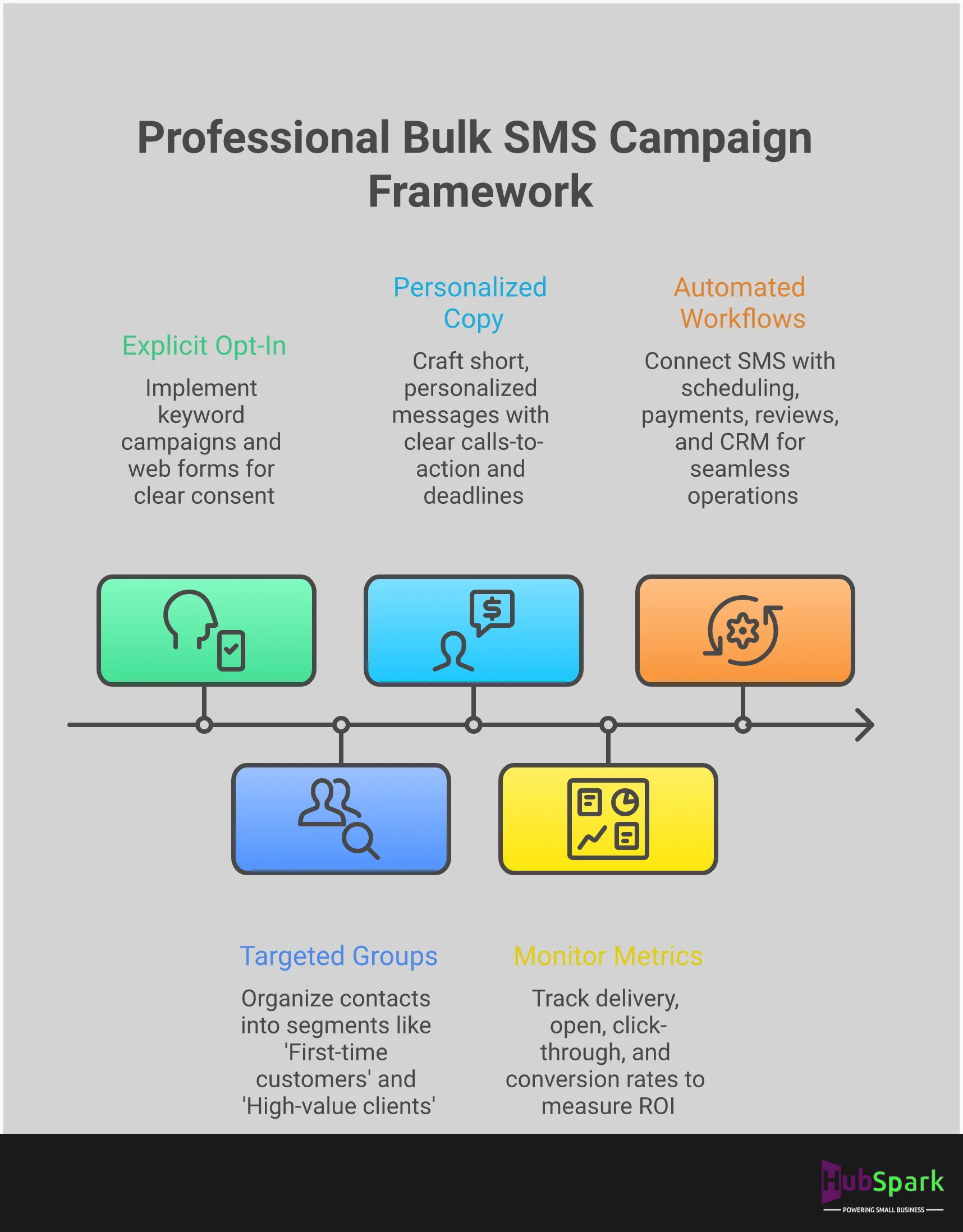
Your platform must be equipped with features that drive professional-level results. First, demand robust personalization. Generic message blasts are ignored. Your system needs to pull customer data, like names and appointment details, directly into your texts to make each message feel personal and relevant. Second, insist on two-way conversation capabilities. SMS is not a broadcast channel; it’s a direct line to your customer. The ability to receive and manage replies in an organized inbox is essential for building relationships and closing sales. This functionality transforms your SMS tool into a powerful part of your customer relationship management strategy. Finally, ensure the platform has built-in compliance tools to manage consent and opt-outs automatically. This is non-negotiable for protecting your business.
Evaluate Integration Capabilities
A standalone SMS tool is operationally inefficient. True efficiency comes from a fully integrated system where your text messaging works in sync with every other function of your business. Your platform must connect seamlessly with your CRM, appointment scheduler, and payment processor. Imagine a customer confirming an appointment via text, and that status is updated automatically in your calendar. Or a payment reminder text that links directly to an invoice. This level of integration eliminates manual data entry and streamlines your workflow. The ultimate goal is to manage all client communications from a single dashboard. HubSpark provides these unified messaging solutions, ensuring your SMS activity is always connected to the complete customer profile.
Analyze Pricing and Scalability
Look beyond the introductory price and analyze the total cost of ownership. A platform’s pricing structure must be transparent and predictable, allowing you to forecast expenses as you grow. Avoid plans with low message caps and high overage fees, as they penalize success. Your chosen platform must be built to scale with your business. The system that serves you with 100 contacts must perform just as reliably when you have 10,000, without forcing a costly and disruptive migration. A scalable text marketing solution is a long-term asset that supports your growth trajectory. Choose a partner that offers a clear path for expansion, ensuring your communication infrastructure is never the reason your business slows down.
Meet Legal Requirements
Executing a bulk SMS campaign without a firm grasp of legal standards is a critical business error. These regulations are not suggestions; they are strict requirements designed to protect consumers, and non-compliance carries severe financial penalties that can cripple a small business. Operating a professional SMS strategy means prioritizing consent and transparency from the very first interaction.
The legal landscape for digital communication is complex, but the core principles are straightforward. You must secure explicit permission before sending marketing messages, provide clear terms, and offer a simple way for customers to opt out. Integrating these practices is fundamental to building a sustainable and effective communication channel. A professional platform like HubSpark’s text marketing solution is built with compliance at its core, simplifying the process of managing consent and adhering to legal requirements. This eliminates guesswork and protects your business from liability.
Consent and Opt-In Regulations
The foundational rule of SMS marketing is unambiguous: you must have documented, express consent from every contact before sending them a promotional message. It is legal to send mass texts, but only to people who have given you permission to text them. This means you cannot purchase a list of phone numbers or add customers without their direct approval. An effective opt-in process involves a customer taking a clear action, such as checking a box on a web form, texting a specific keyword to your shortcode, or providing their number on a physical sign-up sheet with clear consent language. This initial step is your most important defense against legal complaints and the key to building a high-quality contact list.
TCPA and GDPR Compliance
Two major regulations govern SMS communications: the Telephone Consumer Protection Act (TCPA) in the United States and the General Data Protection Regulation (GDPR) in Europe. The TCPA requires businesses to get express written consent for marketing texts and to provide an easy opt-out method, like replying “STOP.” GDPR imposes similar rules for contacts in the European Union, demanding clear consent and transparency about how their data is used. Adhering to these regulations is a critical component of any SMS strategy. Your opt-in process must clearly state the purpose and expected frequency of your messages to ensure your unified messaging solutions remain compliant and effective.
Build Trust with Transparency
Legal compliance is the baseline; building customer trust is the goal. Transparency is the most direct path to creating a loyal subscriber base that welcomes your messages instead of viewing them as spam. Be transparent about message frequency and assure customers that you will not bombard them with texts. When a customer opts in, they should know exactly what to expect. Clearly state whether they will receive appointment reminders, promotional offers, or company updates. This approach sets proper expectations, reduces opt-out rates, and reinforces your brand’s credibility. A trustworthy communication strategy is essential for strong reputation management and long-term customer retention.
Build and Manage Your Contact List
Your contact list is the foundation of your SMS strategy. A high-quality, engaged list produces results; a poorly managed one wastes time and budget. Building this asset requires a systematic approach focused on ethical collection, strategic organization, and consistent maintenance. Centralizing this data is the most effective way to manage it. A robust CRM system provides the data necessary for precise targeting, turning a simple list into a powerful marketing engine.
Collect Phone Numbers Ethically
Permission is not optional; it is the mandatory first step in SMS marketing. Sending unsolicited texts is illegal and damages your brand’s reputation. You must secure explicit consent before adding any phone number to your marketing list. This practice ensures you are communicating with an audience that wants to hear from you, which increases engagement. Implement clear opt-in methods across all customer touchpoints, like website forms or in-store signage with a keyword. For example, a plumbing company could prompt customers to text “PIPES” to receive maintenance reminders. HubSpark’s text marketing tools are designed with compliance at their core, simplifying the process of capturing and tracking consent.
Segment Your Audience for Impact
Sending the same message to every contact is a guaranteed way to get ignored. To maximize impact, you must segment your audience. Organize contacts into distinct groups based on shared characteristics to send specific, relevant messages. This targeted approach makes your communication feel personal and valuable, not like spam. Use customer data to create meaningful segments. Group contacts by purchase history, service used, or location. For instance, an auto repair shop can send an oil change reminder to customers due for service, while sending a tire promotion to a different group. This precision is only possible when your CRM software integrates seamlessly with your messaging platform.
Maintain Data Quality and Compliance
A contact list requires ongoing maintenance to remain effective. Delivery issues are a primary concern, as messages often fail due to invalid or outdated phone numbers. Regularly cleaning your list removes non-working numbers, reduces bounce rates, and ensures your budget is spent reaching actual customers. Beyond cleaning data, you must manage opt-outs promptly. Failing to honor a “STOP” request is a serious compliance violation. An integrated system like HubSpark automates this process, immediately removing opted-out contacts from all future campaigns. By centralizing communications in a unified messaging inbox, you maintain a clean, compliant list without the manual effort.
Craft Effective SMS Messages
Executing a successful bulk SMS campaign requires more than just a contact list and a platform. The message itself is the critical component that determines whether a customer engages or opts out. An effective SMS message is not an art form; it is a science of precision, relevance, and clear direction. Every character must justify its existence, driving the recipient toward a specific action that benefits both them and your business. A poorly crafted message wastes resources and erodes customer trust. The following principles are not suggestions; they are requirements for converting your SMS efforts into measurable results.
Write Concise and Clear Content
In text marketing, brevity is mandatory. Your message has only seconds to capture attention and deliver its point before it is dismissed. Eliminate filler words and vague language. Every message must be direct, valuable, and immediately understandable. State your offer, announcement, or reminder clearly and upfront. For example, instead of “We have some great new deals you might be interested in,” write “Save 25% on all roofing inspections this week only.” This approach respects the customer’s time and ensures your core message is received. Effective text marketing is built on this foundation of efficient communication, ensuring every word adds value and drives your objective forward.
Use Proven Personalization Techniques
A generic message blast is an amateur move. True engagement comes from personalization. Use the customer data within your CRM to craft messages that feel like they were written for an individual, not a list. Address customers by their first name and reference their specific interests or past interactions. For instance, send a targeted offer for a furnace tune-up to clients who had an AC repair last summer. This level of detail demonstrates that you understand their needs. An integrated system like HubSpark is essential here, as it centralizes customer information. The benefits of a CRM are fully realized when you use its data to make your marketing more relevant and effective.
Implement a Strong Call-to-Action
A message without a clear call-to-action (CTA) is a dead end. It leaves the customer wondering what to do next and results in a missed opportunity. Every text you send must explicitly guide the recipient to the next step. Use strong, action-oriented language like “Book Now,” “Claim Your Discount,” or “Reply YES to Confirm.” The CTA should be simple and direct, creating a clear path to conversion. For service-based businesses, this could be a link to your scheduling page. Integrating your SMS campaigns with your appointment management solutions closes the loop, turning a simple text message into a confirmed booking and secured revenue.
Avoid Common SMS Mistakes
Executing a successful bulk SMS campaign requires more than just writing a message and hitting send. It demands precision and an understanding of the operational details that separate professional campaigns from amateur attempts. Inefficient text marketing wastes resources, damages your brand reputation, and alienates the very customers you aim to engage. The most common mistakes are entirely avoidable with the right strategy and tools, yet they consistently undermine campaign performance for businesses that lack a centralized system. These critical errors fall into three categories: deliverability, compliance, and timing.
Failing to address these areas is not an option for a serious business. Poor deliverability means your messages vanish into a void, wasting every dollar spent. Ignoring compliance rules exposes your business to significant legal and financial risk, including fines that can cripple a small operation. Poor timing ensures your messages are ignored or, worse, trigger an immediate opt-out that permanently severs a customer relationship. Mastering these fundamentals is the baseline for any effective SMS strategy. It ensures your investment generates returns instead of creating problems. The only way to manage these variables effectively is to centralize your communications with a platform designed to eliminate these risks from the start.
Solve Deliverability Issues
Failed deliveries are a critical failure point in any SMS campaign. Messages that don’t reach their destination are a wasted expense. These issues typically stem from poor data quality, such as invalid phone numbers, or complex carrier restrictions that block marketing messages. The solution is operational discipline. Regularly clean your contact list to remove inactive or incorrect numbers. A high-quality text marketing platform manages carrier compliance automatically, ensuring your messages are formatted correctly and sent through approved channels. This eliminates the guesswork and significantly improves your delivery rates, guaranteeing your message has a chance to make an impact.
Avoid Compliance Pitfalls
Navigating SMS regulations is not optional; it is a strict requirement for doing business. You must be transparent with customers about the purpose and frequency of your messages. Every campaign must also include a clear and simple opt-out mechanism. Failing to meet these standards violates consumer trust and can lead to severe legal penalties. Your consent-gathering process must be explicit and well-documented. Use a system that automates compliance checks and makes it easy for users to manage their subscription preferences. This protects your business and shows customers you respect their privacy, strengthening your brand’s reputation management.
Master Message Timing and Frequency
When you send a message is just as important as what it says. Sending texts at inappropriate hours or too frequently is the fastest way to lose subscribers. Respect your customers’ time by sending messages when they are most likely to be receptive. Analyze your customer data to identify patterns and optimal engagement windows. A robust CRM for business provides the insights needed to make these strategic decisions. Establish a consistent sending schedule that provides value without overwhelming your audience. This thoughtful approach ensures your messages are welcomed, read, and acted upon, rather than being dismissed as an interruption.
Track Your Campaign Success
Sending a campaign is only half the job. To ensure your SMS strategy generates a positive return, you must track its performance. Analyzing the right data allows you to move beyond guesswork and make informed decisions that improve engagement and drive revenue. This feedback loop is critical for refining your messaging, understanding your audience, and building a predictable system for growth. A successful campaign isn’t just sent; it’s measured, analyzed, and optimized to accelerate results.
Define Key Performance Indicators (KPIs)
To measure success, you must first define it. Key Performance Indicators (KPIs) are the specific metrics that determine if your campaigns are achieving their objectives. Before launching, establish which KPIs matter most for that campaign’s goal. Foundational metrics include the delivery rate, which confirms your messages are reaching recipients, and the opt-out rate, which signals the health of your contact list. Another critical KPI is the response rate, measuring the percentage of recipients who reply to your message. This is a direct indicator of engagement and shows your message is compelling enough to start a conversation. Tracking these provides a clear picture of campaign performance.
Measure Engagement and Conversions
Beyond delivery, you must measure the actions that drive revenue. The click-through rate (CTR) shows what percentage of your audience clicked a link, a vital metric for directing customers to your website. The ultimate measure, however, is the conversion rate. This KPI tracks how many recipients completed the desired action, whether it was scheduling a service through your appointment management system or using a discount code. Tracking conversions provides undeniable proof of your campaign’s return on investment (ROI). It connects your SMS efforts directly to business results, demonstrating the financial impact of your strategy and justifying further investment in the channel.
Optimize Campaigns with Data
Data is useless unless you act on it. The purpose of tracking KPIs is to gain actionable insights that allow you to systematically improve future campaigns. A low CTR, for example, indicates your call-to-action needs refinement. A high opt-out rate suggests the message was not valuable to that audience segment. Use this feedback to test different message copy, send times, and offers. This iterative process of measuring and refining is central to a successful text marketing strategy. By analyzing performance data, you replace assumptions with facts, ensuring each subsequent campaign is more targeted, effective, and profitable than the last.
Launch Your SMS Campaigns with HubSpark
Executing a successful bulk SMS strategy requires more than just a list of phone numbers; it demands a compliant, integrated platform. Using separate tools for customer management, messaging, and analytics creates operational drag. HubSpark eliminates this inefficiency by centralizing your entire Text Marketing operation within a single, powerful dashboard. This approach ensures your campaigns are not only effective but also fully compliant from the start.
The foundation of any campaign is a clean, consent-based contact list. Before sending a single message, you must secure explicit permission from every recipient. HubSpark streamlines this process by integrating lead capture forms and customer management tools. As new contacts enter your system, their consent is automatically logged within our CRM, creating an authoritative record that protects your business and builds customer trust.
Once your list is established, you can leverage customer data to segment your audience for targeted messaging. Group contacts by service history, location, or past purchases to send relevant offers that resonate. Craft your message to be concise and direct, always including a clear call-to-action (CTA) and an easy opt-out option, such as replying “STOP.” With HubSpark, you can schedule campaigns to send at optimal times, ensuring your message arrives when customers are most likely to engage.
After your campaign is live, the work continues. HubSpark’s unified messaging inbox allows you to manage all customer replies in one place, preventing missed opportunities. Monitor key metrics like delivery rates, open rates, and click-throughs directly within the platform. Use this data to analyze performance, refine your strategy, and demonstrate the clear return on your marketing investment. This data-driven approach transforms your SMS campaigns from simple broadcasts into strategic growth drivers.
Related Articles
- Using SMS Marketing to Communicate With Customers – HubSpark
- Complete Guide to Effective SMS Marketing Strategies for Retailers – HubSpark
Frequently Asked Questions
Can I use my personal phone to send bulk SMS messages? Using your personal phone for mass business texting is not a viable or professional strategy. It lacks the necessary tools for managing consent and opt-outs automatically, which exposes your business to legal risk. Furthermore, it cannot provide the analytics needed to track performance or the features required to personalize messages at scale, making it an inefficient and unprofessional choice.
Is it legal to send mass text messages to customers? Yes, sending bulk SMS is legal, provided you operate within strict regulatory guidelines. The absolute foundation of compliant texting is securing explicit, documented consent from every contact before you send them a marketing message. You must also provide a clear and simple way for them to opt out at any time.
What’s the best way to get customers to sign up for my texts? The most effective method is to integrate the opt-in request into your existing customer interactions. Add a clear checkbox on your website’s contact or booking forms, ask customers directly when they are scheduling a service, or use in-store signage with a simple keyword they can text to your number. Always be transparent about the value they will receive by subscribing.
How is bulk SMS different from a regular group chat? Bulk SMS sends a single message to a large list, but each recipient receives it as a private, individual text. Any replies are sent directly back to your business inbox, not to the entire group. This maintains customer privacy and creates a professional, one-to-one communication channel, unlike a standard group chat where all members can see each other’s responses.
How can I tell if my SMS campaigns are actually successful? You determine success by tracking specific performance metrics, not by guessing. Key indicators include your delivery rate, which shows how many texts reached their destination, and your click-through rate, which measures how many recipients clicked a link in your message. The most important metric is your conversion rate, which tells you how many people completed the desired action, such as booking a service or using a promo code.

I am a serial entrepreneur with a 20+ year background in marketing & advertising, with a specific focus on SEO/online/digital marketing. I have a passion for helping owners of small & medium sized businesses grow rapidly through organic search engine optimization & digital marketing. I am blessed to lead a team of some of the most hard working, brilliant, and passionate team to help all of our clients reach their revenue goals!
 App Today!